

India is sitting on a health time bomb with lifestyle diseases that most people don’t even realise
Personalised, AI-driven preventive healthcare can help address this challenge, says Avanish Agarwal, founder of Nutriiya
Avanish Agarwal, Founder, Nutriiya
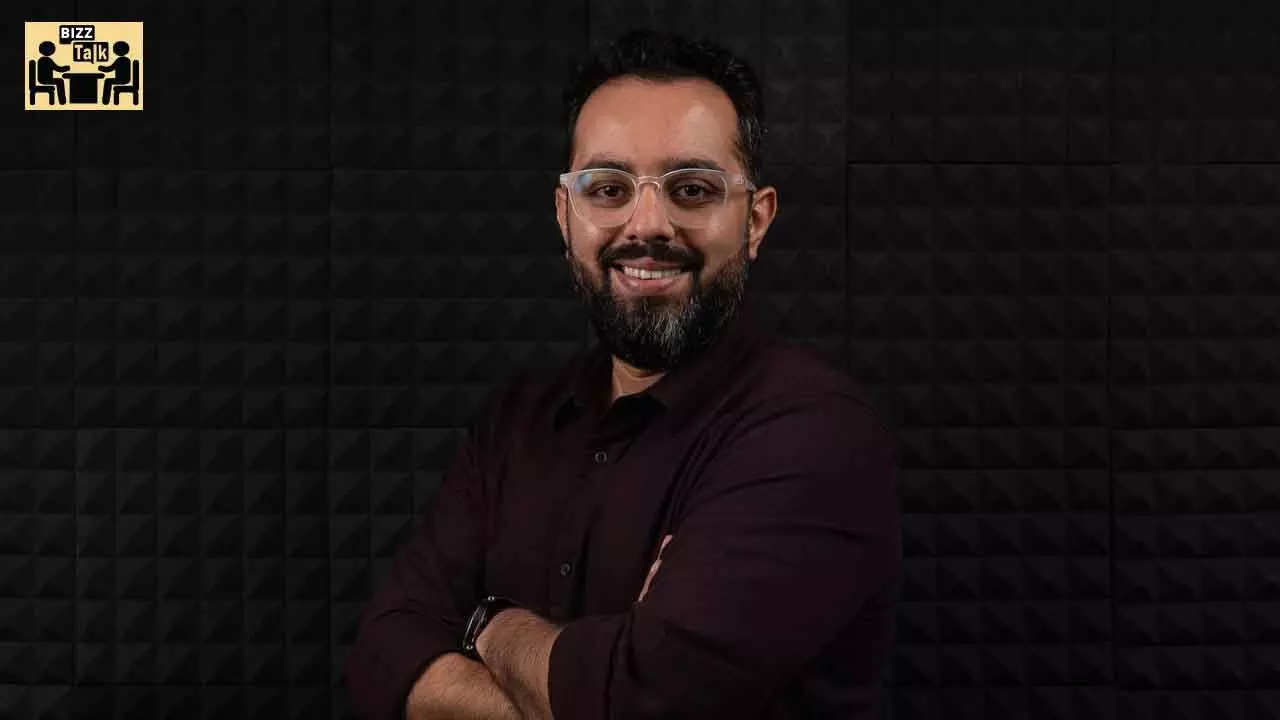
India is sitting on a health time bomb and “most people don't even realize it. We've got 100 million diabetics. And that number is climbing every sin-gle year. The problem isn't that we don't know what healthy eating looks like. Our grandparents knew. They ate dal chawal, seasonal vegetables and most of them stayed pretty healthy without ev-er reading a nutrition label. The problem is that we've completely abandoned those patterns with-out replacing them with anything coherent,” says Avanish Agarwal, founder of Nutriiya in an exclu-sive interaction with Bizz Buzz
What role can AI-driven nutrition play in ad-dressing India's diverse dietary patterns and lifestyle-related health challenges?
India is sitting on a health time bomb and most people don't even realize it. We've got 100 million diabetics. Let that sink in 100 million. And that number is climbing every single year. The problem isn't that we don't know what healthy eating looks like. Our grandparents knew.
They ate dal chawal, seasonal vegetables, didn't snack all day, and most of them stayed pretty healthy without ever reading a nutrition label. The problem is that we've com-pletely abandoned those patterns without replacing them with anything coherent. Now here's where it gets interesting. We have roughly 4,000 registered dietitians in this country.
For 1.4 billion people. Do the math. It's impossible to solve this through tra-ditional one-on-one consultations. The infrastruc-ture simply doesn't exist. So what does AI actually bring to the table? Scale. For the first time ever, we can deliver genuinely personalized guidance to millions of people simultaneously. Not generic ad-vice. Not "eat more vegetables" nonsense that eve-ryone already knows.
Actual specific recommen-dations based on your health markers, your food environment, your daily schedule, your budget. That's not replacing human expertise. That's ex-tending it to people who would never have access otherwise. A daily wage worker in Varanasi de-serves the same quality of nutrition guidance as someone who can afford a fancy nutritionist in South Delhi. Technology finally makes that possi-ble.
How can AI-based nutrition platforms adapt to regional food habits, cultural preferences, and varying lifestyle needs across India?
This is where most health tech companies com-pletely miss the point. They build something in Bengaluru or import an idea from Silicon Valley and expect it to work across India. Then they're surprised when adoption falls flat.
You cannot tell a Punjabi family to stop eating parathas. You cannot tell someone from Kerala that coconut oil is bad. You cannot tell a Bengali to give up their fish. It won't work. And honestly, it shouldn't work. These food cultures exist for rea-sons. They evolved over centuries in specific cli-mates and contexts.
What we need is technology smart enough to work within these realities, not against them. When someone from Tamil Nadu logs their food, the sys-tem should understand what sambar is. It should know that filter coffee is part of daily life there. It should recognize that the millet traditions of that region are nutritionally valuable, not some primi-tive habit to be "upgraded."
The beauty of AI is pattern recognition at massive scale. When you're analyzing data from hundreds of thousands of users across different regions, you start seeing things no individual researcher could spot. Which traditional combinations actually work. Which modern substitutions are causing problems. How the same food affects people dif-ferently based on their lifestyle and genetics.
And then there's the practical stuff. What's availa-ble at the local market? What's affordable? What's in season? If your recommendation requires some-one to buy imported quinoa or expensive supple-ments, you've already lost them. Real solutions work with what people actually have access to.
In what ways can AI-powered nutrition support preventive healthcare in a country as nutrition-ally diverse as India?
Here's what people do in India. We wait until we are sick. Then we treat them. Then we wonder why healthcare costs are exploding.
Prevention is not complicated conceptually. Eat right, move regularly, sleep properly, manage stress. We all know this. But knowing isn't the same as doing, and doing requires feedback. It re-quires understanding whether what you're doing is actually working.
Think about it this way. Most people have no idea whether they're heading toward diabetes until they get the diagnosis. By that point, significant damage has already happened. The condition has been de-veloping silently for years. What if you could catch it at year one instead of year ten? What if you could see the trajectory and change course be-fore it becomes a clinical problem?
That's what continuous AI monitoring enables. Not annual checkups where a doctor looks at your re-ports for five minutes. Ongoing engagement that tracks patterns over weeks and months. Flagging when something looks off. Suggesting adjustments that fit your actual life, not some idealized version of what you should be doing.
The economic argument is overwhelming too. Treating lifestyle diseases will cost India over a trillion dollars in the coming decades. Most of that is preventable. We're literally choosing the expen-sive, painful option because we haven't built the infrastructure for prevention.
How does AI help bridge the gap between tradi-tional dietary practices and modern lifestyle demands?
Our mothers had counted calories. Never tracked macros. Never worried about protein intake. They just ate the way their mother taught them, which was the way generations before had eaten. And they stayed healthy into their seventies. Well for the most parts of it. Never got diagnosed with so called lifestyle diseases.
So what went wrong? Why are we struggling with problems they never faced?
The simple answer is context collapse. Those tradi-tional patterns worked because they were embed-ded in a complete lifestyle. You woke with the sun. You did physical work. You ate fresh food because there was no alternative. You fasted occasionally because of religious practice. You didn't snack constantly because snacks weren't everywhere.
Modern life has stripped away that context. We sit all day. We eat at random hours. We're stressed constantly. We have access to processed foods en-gineered to make us overeat. But we still have the same bodies that evolved for a completely differ-ent existence. One must understand, processed food is not the problem, portion count is.
The bridge isn't about choosing tradition or mo-dernity. It's about figuring out which traditional practices still make sense, which need adaptation, and which were always more cultural than nutri-tional. AI can help with that sorting process be-cause it can analyze outcomes at scale.
Does in-termittent fasting still work for someone with a desk job? How do you modify it? Which tradition-al food combinations have genuine synergies? Which are just habit? This is actually really excit-ing work. We're not throwing away ancestral wis-dom. We're pressure testing it against modern data and keeping what holds up.
What impact can AI-enabled nutrition solutions have on managing rising concerns such as obesi-ty, diabetes, and metabolic disorders?
These conditions are not mysteries. We know what causes them. We know what reverses them. The science is pretty clear. The problem is implementa-tion at scale.
Obesity, diabetes, metabolic syndrome. These are largely diet-responsive conditions. Unlike genetic diseases where you can only manage symptoms, these can often be reversed through sustained changes in how you eat and live. The knowledge exists. It's been sitting in research papers and clini-cal guidelines for years. What's missing is getting that knowledge to work in real people's real lives.
Here's what current approaches look like. You go to a doctor. You get told to "eat healthy and exer-cise." Maybe you get a generic diet sheet. You try for two weeks. Life gets busy. You fall off. Noth-ing changes. Six months later, your numbers are worse.
AI changes this by making intervention continu-ous. Every day you're getting feedback. Every week you can see whether things are moving in the right direction. The recommendations adapt based on your actual response, not some textbook aver-age. Because here's the thing most people don't re-alize. Glycemic response varies hugely between individuals. The same roti that spikes one person's blood sugar might barely affect another. Generic advice can't account for that. Personalized AI can.
And the early identification piece is massive. By the time you get a diabetes diagnosis, you've typi-cally been pre-diabetic for years. What if we could catch that drift at year one? What if the interven-tion happened when it's easiest and most effective? That's the potential here.
How can data-driven nutrition tools make per-sonalized health guidance more accessible to a wider population?
Accessibility is everything. If we build amazing technology that only serves rich urban users, we've fundamentally failed. That's not the vision. That's not why I started this.
Real accessibility means rethinking everything from first principles. Pricing that works for Indian income levels, not American ones. Interfaces that work for people who aren't tech-savvy. Regional language support that actually feels natural, not like awkward translation. Functionality that works with patchy internet connectivity.
But here's what really excites me about the acces-sibility question. When guidance comes from AI systems trained on validated science and continu-ously learning from outcomes, the quality doesn't depend on who's receiving it. The insights availa-ble to a user in some small town in Madhya Pra-desh can be just as good as what someone in Bandra gets. That kind of democratization wasn't possible before. The expertise was locked up in expensive consultations in major cities.
There's also a collective benefit that builds over time. Data from millions of users, properly anon-ymized and protected, creates understanding that helps everyone. We start seeing population-level patterns. What's working in different regions. Which interventions actually stick. That feeds back into better recommendations and eventually into public health policy.
This isn't just about individual health optimacization. It's about building something that genuinely moves the needle for the country. That's the scale of ambi-tion this problem demands.





